If you have ever wondered why one Derry home gets immediate attention while another sits longer, you are asking the right question. Home value is not based on guesswork or what an owner hopes to get. It comes down to a mix of market data, location, condition, affordability, and how your home compares to nearby sales. Let’s break down what really drives home values in Derry, NH so you can make smarter decisions.
Derry Market Conditions Matter First
Before you look at paint colors or kitchen finishes, start with the market itself. Derry is a large Southern New Hampshire town with an estimated population of 33,990, about 12,970 households, and a 70.2% owner-occupied housing rate. That gives you a helpful snapshot of a community with a strong base of homeowners and steady housing demand.
Recent market conditions also shape value in a big way. In the New Hampshire REALTORS® April 2026 Local Market Update for Derry, the single-family market showed 1.0 months of inventory, 23 homes for sale, 25 days on market until sale, and sellers receiving 103.0% of original list price on average. The median single-family sales price was $597,500.
For you as a seller, that means buyers may be competing, but pricing still matters. In a tight market, homes that are well-priced and well-prepared often stand out quickly. Homes that miss the mark on condition or strategy can still lose momentum.
Comparable Sales Set the Baseline
A home’s value usually starts with comparable sales, often called comps. These are recently sold homes in the same area with similar features, such as size, bedroom count, bathroom count, and age. That is why two homes that look similar online can still have different market values.
This is also why what you spent on upgrades does not automatically equal added value. The market decides what buyers are willing to pay for those improvements in your specific part of Derry. The key question is not, “How much did this cost?” but “How does this compare to what buyers just paid nearby?”
In a town as varied as Derry, hyper-local comps matter. A pricing strategy should reflect recent sales in the same pocket of town, not just a broad town-wide average.
Location Within Derry Influences Value
Derry covers about 35.47 square miles, so not every location performs the same way. Even within one town, buyers may value convenience, privacy, recreation access, or neighborhood setting differently. Those tradeoffs often affect how much demand a home gets.
Derry’s location is a major part of its appeal. The town highlights its access to Route 28, Route 102, and Interstate 93, along with amenities such as parks, libraries, beaches, golf courses, walking trails, and arts venues including the Derry Opera House and Stockbridge Theater. For many buyers, that combination of commuter convenience and local amenities adds to the town’s overall value.
Within Derry, some buyers may prefer homes with easier access to major routes. Others may lean toward homes near conservation land, trail systems, or recreation spaces. Derry’s Parks & Recreation resources include conservation land, hiking, cross-country skiing, and the rail trail connection to Windham, which can be attractive to buyers comparing lifestyle options.
That does not mean one area is always worth more than another. It means value often comes from buyer preferences and the recent sales patterns in that specific area.
Property Taxes Affect Affordability
Home value is not just about the sales price. Monthly carrying costs matter too, and property taxes play a direct role in what buyers can comfortably afford. In Derry, the 2025 tax rate was set at $18.99 per $1,000 of assessed value, and the town noted that 2025 was not a revaluation year.
For buyers, that tax rate becomes part of the monthly payment picture. For sellers, it matters because affordability can influence how aggressively buyers bid, especially when they are comparing your home to others at a similar price point.
A higher monthly cost does not automatically reduce value, but it can affect the size of the buyer pool. In practical terms, taxes are one more factor that shapes demand.
Condition Plays a Bigger Role Than Many Sellers Expect
Once a buyer finds a home in the right location and price range, condition becomes a major filter. Buyers and appraisers both look closely at the home’s physical state. Deferred maintenance, worn finishes, or visible repair needs can change how your home stacks up against similar sales.
This is where value can shift quickly. Two homes with the same floor plan may not command the same price if one feels move-in ready and the other feels like a project. Buyers often calculate not just repair costs, but also time, inconvenience, and uncertainty.
A clean, maintained home tends to create fewer objections. It can also support stronger pricing because it compares more favorably to other homes buyers are considering.
Updates Can Help, But the Market Decides
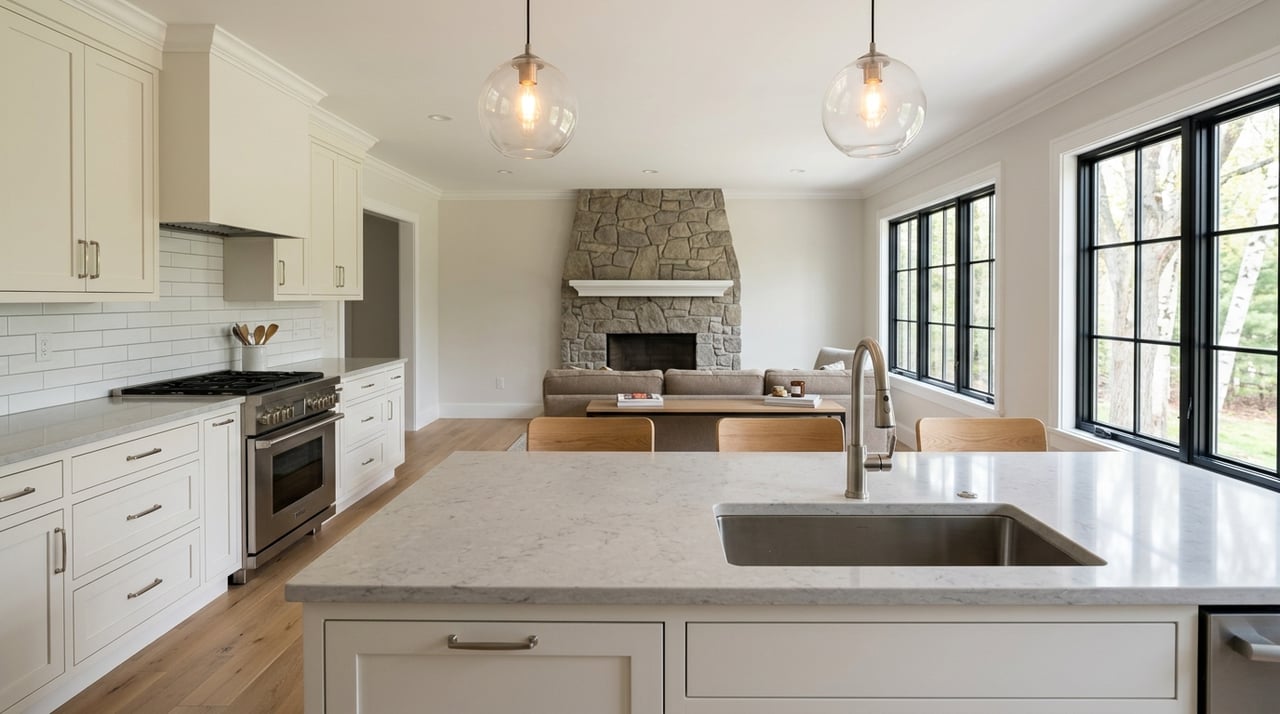
Many sellers ask which updates add the most value. In general, buyers tend to respond well to improvements that make a home feel current, functional, and easier to maintain. Common examples include kitchens, bathrooms, roofs, windows, HVAC systems, flooring, and paint.
Still, updates are not a dollar-for-dollar math problem. A renovation may improve appeal and reduce buyer hesitation, but the final value depends on what similar updated homes are actually selling for nearby. The market always has the last word.
At the town level, improvements clearly matter. Derry reported that new construction, additions, and remodeling added $55 million to total 2025 valuation. That does not mean every project returns the same amount, but it does confirm that upgrades and physical improvements influence value.
School Structure Can Shape Buyer Interest
For some buyers, school logistics are part of how they evaluate a home’s location and fit. The Town of Derry lists the Derry Cooperative School District and Pinkerton Academy as the high school, and Pinkerton states that it serves Derry and neighboring towns by contract.
This does not create a fixed value premium for every property. It does, however, affect how some buyers compare Derry to nearby towns and how they narrow their search within town. When demand is strong, factors tied to daily convenience can influence buying decisions.
The most important point is to stay factual. School-related value is about buyer behavior and local market comparisons, not assumptions.
Online Estimates Only Tell Part of the Story
Online home value tools can be useful as a starting point, but they are not the whole story. These tools rely on data models and public information, and they may not fully capture a home’s condition, updates, lot position, layout, or the feel of a specific street.
In Derry, that gap can matter. A home’s final pricing strategy should reflect current inventory, recent comparable sales, commuter access, amenity appeal, tax impact, and actual condition. Software can miss those details.
That is why a personalized valuation is usually more useful when you are seriously thinking about selling. It gives you a more grounded view of where your home fits in the current market.
What Sellers Should Focus On
If you want to protect or improve your home’s market position in Derry, focus on the factors you can control. The strongest results usually come from combining realistic pricing with smart presentation and a clear understanding of what buyers are seeing in competing homes.
A practical seller checklist includes:
- Review recent comparable sales in your part of Derry
- Address visible maintenance issues before listing
- Prioritize updates that improve function and first impressions
- Understand how taxes affect buyer affordability
- Position the home around real location benefits like access, trails, and amenities
- Use online estimates as a reference, not the final answer
This is also where local experience matters. A strong pricing opinion should go beyond square footage and bedroom count. It should account for workmanship, condition, neighborhood context, and how buyers are behaving right now.
Julie McMaster’s builder-informed perspective can be especially helpful here. Construction quality, upkeep, and improvement choices often influence value more than sellers expect, especially when buyers are moving quickly and comparing homes side by side.
The Bottom Line on Derry Home Values
What really drives home values in Derry, NH is not just one thing. It is the combination of comparable sales, market supply and demand, location within town, property taxes, condition, updates, and buyer perception.
If you are planning to sell, the goal is not to chase a number you saw online. The goal is to understand how your home fits today’s Derry market and price it with confidence. If you want clear guidance on your home’s value and the smartest next steps, connect with Julie McMaster.
FAQs
What affects home values most in Derry, NH?
- The biggest factors are recent comparable sales, current inventory, location within Derry, property condition, updates, and overall buyer demand.
How important is location within Derry when pricing a home?
- Location within Derry can matter a lot because buyers may weigh commuter access, privacy, recreation access, and proximity to local amenities differently.
Do home improvements always raise value in Derry, NH?
- Improvements can help, especially when they make a home feel move-in ready, but the market decides how much added value buyers will actually pay.
Are online home value estimates accurate for Derry homes?
- Online estimates can be helpful for a rough starting point, but they often miss details like condition, updates, lot setting, and current local competition.
How do Derry property taxes affect home value?
- Property taxes affect monthly affordability, which can influence how many buyers can comfortably consider a home and how strongly they compete for it.